Author: Sh4ne024
-
The Devon AI Mega-Campus: No Consent Without the Numbers.
A 1.5GW AI data centre is not a business park. It is a power-station-scale demand placed into the countryside. North Devon has suddenly become the test case for one of the biggest questions Britain now faces: who gets priority access to land, water, electricity and grid capacity , local communities, food production and ordinary bill-payers,…
-
Net Zero Before Nature
When the Protectors Become the Enablers There was a time when Britain’s environmental organisations existed to protect birds, wildlife, rivers, farmland, ancient landscapes and historic places from industrial damage. Today, too many of them appear to have accepted a different role. They no longer ask the most important question: should this countryside, habitat, marshland, river…
-
Net Zero Against Nature: Why Are We Industrialising the Carbon Stores We Claim to Protect?
There is a contradiction at the heart of Britain’s energy policy, and it is becoming impossible to ignore. On one side, government agencies, conservation bodies and climate campaigners tell us that peatlands are among the most important natural assets in the country. They store carbon. They hold water. They slow flooding. They support rare wildlife.…
-
When Even Mark Carney Retreats from Net Zero, Why Is Ed Miliband Still Charging Ahead?
Canada has just exposed the flaw at the heart of Britain’s energy policy: national energy security cannot be built on climate slogans, imported dependency, and grid fantasy. There are moments in politics when a single decision cuts through years of spin. Mark Carney’s reported pivot back towards oil and gas in Canada is one of…
-
The Gray Blob Versus the Greenery
Why Green Belt Must Always Mean Green Belt There is a battle taking place across Britain’s countryside. It is not always fought with loud voices. It is not always announced with banners, slogans, or dramatic headlines. More often, it arrives quietly, wrapped in planning language, environmental claims, corporate presentations, consultation boards, policy documents, and promises…
-
Hope Moor Wind Farm: Intermittent Energy Sprawl or Reliable British Power?
Look at the proposed Hope Moor Wind Farm map and ask one simple question:Is this really the best Britain can do? More than a thousand hectares of upland countryside, peat, watercourses, habitat and landscape would be brought into the orbit of an industrial energy scheme, not for firm power, not for 24-hour baseload, not for…
-
“from the drawing board to the destruction of our food”
The problem is not that Whitehall has never been told. The problem is worse: The consequences are known, written down, acknowledged , and then subordinated to the energy timetable. Whitehall policy does recognise Best and Most Versatile agricultural land. EN-1 says applicants should minimise impacts on Grades 1, 2 and 3a land and preferably use…
-
Net Zero for the Public , Freedom to Fly for the Climate Establishment
Britain has driven down emissions from power stations and industry, but aviation emissions have returned to roughly the same level as those from electricity generation. Meanwhile, many of the people demanding greater sacrifice continue travelling between international climate conferences. For more than twenty years, the British public has been told that preventing climate change requires…
-
The £865 Billion Money Trick: Real Costs for Households, Magical Benefits for the Spreadsheet
The Government wants the public to believe that imposing another legally binding carbon target will produce an extraordinary £865 billion economic benefit. It sounds wonderful. Spend hundreds of billions of pounds replacing heating systems, changing vehicles, rebuilding electricity networks, constructing new generation, installing storage, expanding substations and altering the way people live , and somehow…
-
NISTA Cuts Oversight While Britain Faces a £16 Billion-a-Year Energy Burden
The organisation charged with scrutinising Britain’s biggest projects is reducing oversight just as infrastructure spending, subsidies and long-term consumer liabilities reach extraordinary levels. A revealing report in Construction News has exposed the thinking now taking hold inside the National Infrastructure and Service Transformation Authority. NISTA.NISTA has removed 27 major Ministry of Defence programmes from the…
-
£1,400/MWh to Protect Britain’s Power Supply: The Summer Warning We Cannot Ignore
Britain was not facing an immediate blackout. But on a hot June evening, low wind, falling solar production and power-station outages forced the system operator to secure 1.7GW of imported electricity at extraordinary prices. This exposed the difference between cheap intermittent generation and an affordable, dependable electricity system. The screenshot that should concern everyone At…
-
How the Net Zero agenda is overriding Britain’s duty to preserve its heritage
When the Protectors Become the Developers Britain’s historic landscapes were not handed down to us so that one political generation could industrialise them in pursuit of an arbitrary target. They were entrusted to organisations, charities and public bodies whose purpose was supposed to be clear: to protect places of historic interest, natural beauty and ecological…
-
Why Prime Ministers Keep Changing While the System Stays the Same
Britain is changing Prime Ministers with increasing frequency, yet the direction of government barely changes. Each new leader arrives promising renewal. They speak of a new approach, new priorities and a government prepared to listen to the public. But within months, the language changes. Promises are diluted, policies are abandoned and the new Prime Minister…
-
Calderdale Wind Farm: If It Is Only a Consultation, Why Is It Already in the Grid Data?
Bradford Council says communities are being consulted on an “abstract concept” — yet the Calderdale Wind Farm already appears in grid/TWR-linked data as a 312MW project. That raises serious questions about transparency, timing and trust. There is a growing problem with the Calderdale Energy Park proposal on Walshaw Moor.It is not just the scale of…
-
Yorkshire’s Solar Takeover: The Hidden Grid-Led Transformation of Our Countryside
Across Yorkshire, the debate over solar energy is usually presented as a series of separate local planning disputes. One village objects to one solar farm. One parish council raises concerns about one battery site. One farming family fears the loss of one block of productive land. But when the data is examined properly — using…
-
The Subsidy Clock: Watch Britain’s Energy Subsidy Bill Rise in Real Time
Here’s a ready-to-use WordPress Classic Editor blog draft using your screenshots.The Subsidy Clock: Watch Britain’s Energy Subsidy Bill Rise in Real TimeI opened The Subsidy Clock today and took three screenshots within a short period.What I saw should concern every household, every pensioner, every business, and every taxpayer in Britain.The counter moved from:£131,779,933,649to:£131,779,940,968That is an…
-
The Government Is Still Building the Machine After Promising the Result
The Government Is Still Building the Machine After Promising the Result Michael Shanks, the energy minister, has described offshore wind as the “backbone” of Britain’s future energy system. That phrase is revealing. If offshore wind is truly the backbone of the future system, then Britain should already have the industrial spine needed to deliver it.…
-
The 2030 Grid Pathway Is Already Years Off Track — The Data Proves It
The public are being told that Britain is on a pathway to deliver a transformed electricity system by 2030.But when you strip away the political language, the glossy maps, and the slogans, the working grid data tells a very different story.The map may say “SSENT Pathway 2030”.The actual delivery dates say something closer to 2034,…
-
THE GREAT NET ZERO SCANDAL: WHY HOUSEHOLDS ARE PAYING FOR WASTED ENERGY
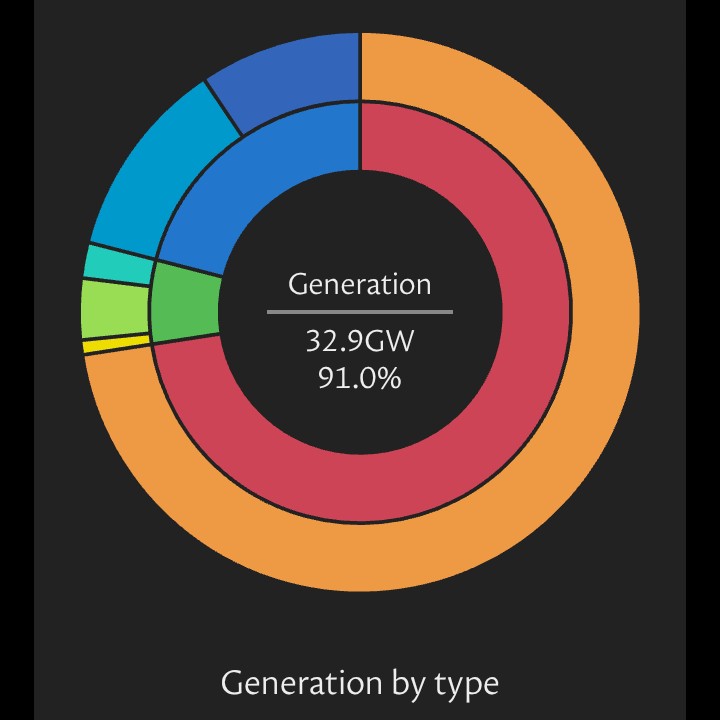
Today’s National Grid snapshot tells the story better than any ministerial speech. At the time of the screenshot, Britain was generating around 24.4GW of electricity. Gas was providing 7.38GW, or 23.1% of demand. Solar was producing around 9.4GW to 10GW, while wind was producing only around 3GW. That is the Net Zero problem in one…
 SAY NO TO THE DESTRUCTION OF OUR LAND