Britain’s green transition is creating immense new value in land, seabed and infrastructure. The question is who captures that value , and who is left carrying the cost.
By Shane Oxer
Robin Hood wore green and took from the rich to give to the poor. Britain’s Net Zero economy also wears green, but the direction of travel is beginning to look rather different.
Ofgem has recorded £4.48 billion of domestic energy debt and arrears, affecting around 3.6 million customers, while Energy UK believes the wider debt burden is closer to £5.5 billion and around six million people are living in fuel poverty.
These are not abstract figures. They represent households cutting back on heating, food and other essentials while Britain embarks upon one of the most expensive and physically disruptive infrastructure transformations since the Industrial Revolution.
Across England, agricultural land is being optioned for huge solar developments. Across Scotland, hills, peatlands and farmland are being crossed by new transmission corridors. Around the coast, large areas of seabed are being turned into valuable offshore-energy assets.
The language used to describe this transformation is familiar:
investment, decarbonisation, energy security, nature recovery. What receives far less attention is who owns the underlying asset, who acquires the new income stream and what happens to the people who were already making their living from the land or sea before government policy changed its value.
The best place to start is with the tenant farmer. He may have worked the same land for 30 or 40 years. His father may have farmed it before him. He owns the machinery, employs local people, manages the soil and carries the risk when harvests fail.
Yet he may not own the land beneath his boots, and that distinction is becoming enormously important. A field once valued principally for what it could produce in wheat, barley, beef or milk can now be worth substantially more because a developer wants to cover it with solar panels.
Elsewhere, the same land can acquire new financial value through biodiversity units, environmental payments, carbon schemes and other natural-capital markets.
An owner-farmer may welcome that opportunity because he owns the asset and can choose to diversify.
A tenant occupies a very different position because somebody else ultimately controls the freehold and can decide whether those fields remain in conventional agriculture at all.
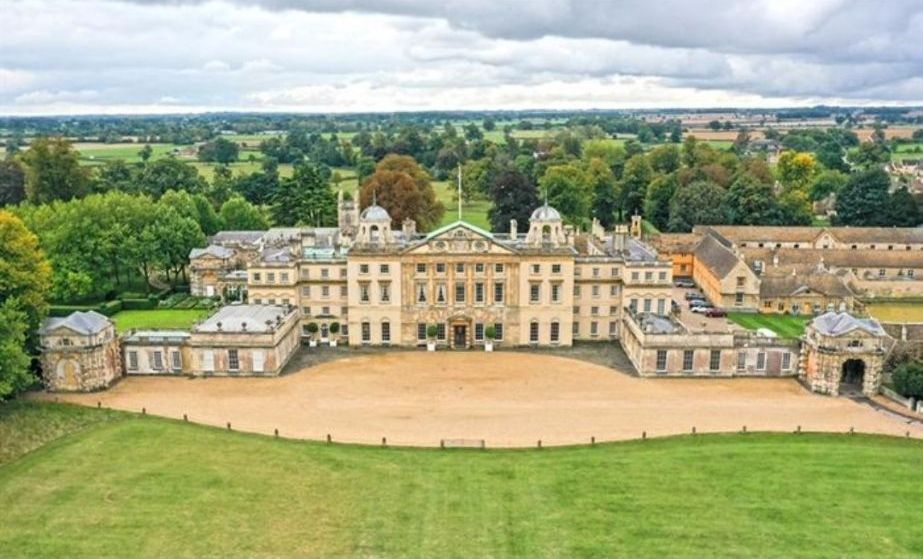
Botley West in Oxfordshire demonstrates exactly why that matters. Three longer-term Agricultural Holdings Act tenancies on land associated with Blenheim Estate were surrendered through negotiated settlements so that vacant possession could be obtained for the proposed solar development.
They were not compulsorily evicted, and that distinction should be made clearly, but the result is equally clear: their long-term rights to farm the affected land ended. The land remained, Blenheim remained and the underlying landed interest remained. The tenancies did not.
Evidence submitted during the planning examination then revealed the potential financial transformation of that same asset.
Payments towards the relevant Blenheim heritage arrangements were calculated to rise from approximately £88,000 a year under agricultural tenancy arrangements to around £440,000 a year with solar.
That figure is not a personal payment to the Duke of Marlborough and should never be presented as one, but the underlying economic reality is more significant than the caricature. The same land can produce substantially more income once its use changes from agriculture to energy, while the tenant beneath it can disappear from the picture.
There is nothing mysterious about the incentive. If one use produces £88,000 and another can produce £440,000, the person controlling the asset has an obvious commercial calculation to make.
The person farming that asset without owning it does not possess the same leverage.
The same logic can be seen in Lincolnshire, where the developer behind Springwell Solar Farm described Blankney Estate’s willingness to discuss large-scale solar as important to the progression of the site.
Large contiguous estates are attractive because developers can secure control over thousands of acres without having to negotiate with scores of separate freeholders.
Britain’s historic concentration of landed wealth, inherited from a different age, has therefore acquired a distinctly modern value.
An ownership structure created centuries ago can now provide exactly what a twenty-first-century infrastructure developer needs:
large blocks of land, concentrated decision-making and long-term contractual certainty.
The intended Blankney lease runs for approximately 40 years and six months, after which the land returns to the freeholder. That single fact says a great deal about the economics of the system. The estate does not have to sell its inheritance. It can retain the capital asset, receive decades of income from its temporary use as energy infrastructure and recover the land when the lease ends. The panels are temporary. The ownership is not.
The picture becomes even more striking when the investigation moves north.
Scotland is where the phrase “offshore wind” begins to reveal how misleading it can be.
The turbines may stand at sea or on remote islands, but the infrastructure needed to make them useful does not remain offshore. Shetland’s Viking Energy Wind Farm is a good example. It has 103 turbines and 443MW of generating capacity. Building it required around 70 kilometres of on-site roads, more than 70,000 cubic metres of concrete in turbine foundations, roughly 1.5 million cubic metres of rock extraction and an extensive network of cables across upland peat terrain.
Whatever view one takes of wind power, these are the physical facts behind the language of clean energy.
Turbines of that scale do not float into existence without roads, excavation, foundations, compounds and electrical infrastructure.
Nor could Viking operate as a major exporting power station without somewhere for the electricity to go.
Shetland therefore required a 260-kilometre high-voltage direct-current subsea connection running from a converter station at Kergord to Noss Head near Wick in Caithness.
The link can carry 600MW. Once that power reaches mainland Scotland, however, the journey has only begun.
It still has to travel south through a transmission system now being rebuilt on an extraordinary scale.
SSEN Transmission is planning around £29 billion of investment across the north of Scotland over five years.
The proposed Spittal–Loch Buidhe–Beauly line runs for about 170 kilometres. Beauly to Peterhead adds roughly 186 kilometres of new double-circuit 400kV overhead transmission line, with steel structures around 58 metres high. Kintore to Tealing adds another approximately 106 kilometres, with towers averaging around 57 metres.
Those three schemes alone account for roughly 462 kilometres of principal new 400kV overhead line before associated diversions, substations, access roads, converter stations and construction compounds are counted.
The build-out continues across the Lowlands. SP Energy Networks has begun a £12 billion five-year programme across central and southern Scotland, including new major substations, upgrades to hundreds of kilometres of circuits, new overhead infrastructure, underground cable replacement and additional subsea links.
Put that alongside the £29 billion northern programme and Scotland’s two transmission regions are facing investment programmes worth up to £41 billion over broadly the same period. Forty-one billion pounds, much of it for the infrastructure required to move, manage and transmit electricity rather than for the turbines themselves.
This is why it is inadequate to describe the programme as simply offshore wind. It is, in practical terms, a rewiring of Scotland.
Shetland shows the whole system in miniature. The islands carry Viking’s turbines, roads, foundations and cabling. A 260-kilometre electrical link connects them to mainland Britain. New transmission infrastructure then carries the electricity south. Meanwhile another generation of offshore development is being planned around Scottish waters.
ScotWind initially awarded option agreements to 20 projects with potential capacity of up to 27.6GW, generating £755.2 million in option fees.
Crown Estate Scotland says that operating projects will eventually make multi-million-pound annual payments.
Those receipts go into Scottish public finances rather than into the private income of King Charles III, but the economic principle is still important: rights over seabed that existed long before Net Zero suddenly acquired enormous commercial value because government policy created demand for them.
The seabed did not change. The policy did. Offshore targets created demand for development rights, and those rights became valuable.
The INTOG programme extends that process further, with selected projects covering more than 1,600 square kilometres of seabed and some leases capable of lasting 50 years.
The Scottish Government has estimated that ScotWind, INTOG and associated port and supply-chain development could represent around £100 billion of potential capital value if fully deployed.
Shetland remains directly in the path of that next wave. Stoura alone is proposed as a floating offshore wind farm of up to 500MW over an area of roughly 100 square kilometres east of the islands. A landscape and seascape already transformed by Viking and its transmission infrastructure is therefore being positioned for another generation of industrial energy development.
This is what the word transition means when translated from a government strategy into the real world.
It means steel, concrete, cables, roads, substations, converter stations, pylons, lease agreements and capital.
It also means ownership. Viking began with substantial community involvement, but SSE Renewables became sole owner of the project in 2019. Community arrangements remain, including a benefit fund of around £2.2 million a year, while Shetland Islands Council owns the Busta Estate and is one of 14 landowners that entered long-term lease agreements connected with the development.
Half of Viking’s capacity also secured a 15-year government-backed Contract for Difference.
The chain is therefore visible from the ground up: land, lease, developer, grid connection, government-backed revenue mechanism, infrastructure, capital and ultimately the consumer.
Institutional finance then adds another layer. Macquarie’s Green Investment Group Renewable Energy Fund 2 raised more than €1.6 billion from pension funds, local-government pension schemes, insurers and sovereign wealth funds before investing in Island Green Power, a developer behind major British solar schemes. The circularity is striking.
A council worker pays into a pension scheme. The pension capital is invested through an infrastructure fund. The fund invests in a renewable-energy platform. The platform obtains long-term rights over British land. The landowner receives rent. The developer builds an income-producing asset. The investor seeks a return.
The same council worker goes home and pays an electricity bill.
There is nothing unlawful about that. Pension funds are supposed to invest, landowners are entitled to exploit their assets, developers need capital and investors expect returns. The problem is the way politicians repeatedly use the word “investment” as though investment were a gift.
It is not. Every serious investor expects to be paid, and the public debate rarely follows the money far enough to ask exactly where those returns ultimately come from.
That omission becomes harder to ignore when domestic energy debt is at record levels.
Ofgem’s £4.48 billion figure and the 3.6 million customers affected are not campaign rhetoric. Energy UK’s estimate that the wider debt burden is closer to £5.5 billion is equally sobering. Around six million people are living in fuel poverty.
Wholesale gas prices, wars, network costs, taxation and other factors all contribute to bills, and it would be dishonest to blame every pound of household energy debt on Net Zero.
But it is equally dishonest to celebrate the enormous flows of capital into the green transition without asking where the returns generated by that capital are flowing.
The same question is now expanding beyond energy into nature itself. Thirty-by-thirty, the commitment to conserve 30 per cent of land and sea by 2030, is not currently a programme allowing the Government simply to seize 30 per cent of the countryside. In England, bringing additional land forward is presently voluntary.
Around that policy, however, Britain is building a growing natural-capital economy in which biodiversity improvement, carbon storage, habitat restoration and other environmental outcomes can acquire monetary value.
A field can now produce food, host solar panels, generate biodiversity units, attract environmental payments or become part of a private nature market.
Each of those new uses can change what controlling that land is worth.
That brings us back to the same question that began in the tenant farmer’s field.
Who owns the asset that has just become more valuable?
The owner can sign the solar lease. The owner may be able to enter the environmental agreement. The owner controls the long-term use of the land.
The tenant may own the farming business, but not the appreciating asset beneath it. The fisherman may have worked an area of sea for generations, but does not own the seabed. The consumer may finance the energy system through bills, but does not own the infrastructure generating the return.
This is the real meaning of Robin Hood in reverse.
It is not a cartoon in which ministers take cash directly from poor households and hand it to aristocrats.
The machinery is more subtle. Government policy creates demand. Demand increases the value of scarce land, seabed and infrastructure rights.
Those who already control those assets are best placed to monetise the change.
Developers turn the rights into projects. Institutional capital finances them. Investors seek returns.
At the other end of the system sit people with use but not ownership:
the tenant farmer, the fisherman, the rural community and the energy consumer.
Sometimes those people benefit. Communities receive payments. Owner-farmers diversify successfully. Pension funds earn returns for ordinary workers. Public bodies receive seabed revenues. Those facts matter and should be recorded.
But sometimes the tenant loses the field.
Sometimes the fisherman loses access.
Sometimes the landscape gets the pylons. And the consumer still gets the bill.
That is why the investigation must begin at the bottom and work upwards.
Find the tenant, then the freeholder, then the lease, then the developer, then the investment fund, then the government support. Follow the cable, the pylon and the money until the whole structure becomes visible.
Blenheim has shown how agricultural rental value can become dramatically greater solar value while long-term tenancies disappear.
Blankney has shown why concentrated ownership appeals to developers.
Shetland has shown that offshore wind does not remain offshore.
ScotWind has shown how valuable seabed rights can become.
Britain’s energy-debt figures show what is happening at the opposite end of the system.
Britain is not simply changing the way it generates electricity. It is changing the economic value of land, sea and nature itself, and whenever that happens the people who already control those assets begin from the strongest position.
Robin Hood wore green too. But at least he knew which direction the money was supposed to travel.
Shane Oxer, Campaigner for fairer and affordable energy
 SAY NO TO THE DESTRUCTION OF OUR LAND
Leave a comment