Britain’s largest solar farms need one thing above all else: land. The fewer people who own it, the easier the project becomes. That is turning some of the country’s great estates into ideal partners for the renewable-energy industry , while tenant farmers beneath them can face a very different future.
By Shane Oxer
For all the talk of panels, batteries, grid connections and megawatts, the first thing a giant solar developer needs is something much older and simpler: land.
A great deal of it.
Not 20 acres behind an industrial estate, but hundreds, sometimes thousands, of acres close enough to a high-voltage grid connection to make a nationally significant project possible. The engineering matters, the planning system matters and the availability of network capacity matters, but before any of them can be exploited somebody has to control the ground.
This is where Britain’s centuries-old pattern of concentrated landownership suddenly becomes remarkably useful to the twenty-first-century energy industry.
A developer assembling a 1,000-acre solar farm could negotiate with 40 independent farmers, 40 solicitors, 40 lenders, 40 sets of title deeds and 40 different opinions about whether the project is a good idea.
Or it could negotiate with one great estate.
The developers themselves are quite open about which arrangement they prefer.
Springwell Solar Farm in Lincolnshire provides one of the clearest examples. The scheme, approved by the Government in April this year, covers roughly 1,280 hectares and has a proposed generating capacity of 800MW. It is the largest solar development yet approved in Britain by generating capacity.
The fascinating part lies not in the panels but in how the site came to exist.
Springwell’s own site-selection evidence describes Blankney Estate as one of Lincolnshire’s largest single landowners and records that it was willing to discuss a large solar development on its estate. The applicant went further. The Estate’s willingness to enter those discussions was, it said, “key to the progression of the Site” through the selection process. The applicant specifically prioritised single, contiguous sites with as few landowners as possible; areas involving multiple ownerships or unwilling landowners were discounted.
There, in the developer’s own paperwork, is a lesson in the economics of modern landownership.
The size of a great estate is not merely a historical curiosity. It is an infrastructure advantage.
Large-scale solar requires land assembly. Concentrated ownership makes land assembly easier. A landed structure inherited from generations past therefore offers precisely what a modern energy company wants: thousands of acres under a small number of controlling interests.
Springwell’s later planning material makes the same point in more restrained language. The applicant sought a site that could be acquired voluntarily and stated a preference for as few landowners as possible, initially looking for sites with no more than two principal owners.
That is not sinister. It is commercially rational.
But it has consequences.
For the estate, the land can acquire an entirely new income-producing function while the underlying freehold remains intact. Instead of depending primarily upon agricultural rents and farming returns, part of the estate can become an energy asset subject to a long-term commercial agreement. The owner has not necessarily sold the inheritance. The owner has changed what the inheritance earns.
Springwell has already been granted consent, although North Kesteven District Council and Lincolnshire County Council have formally issued a High Court claim seeking judicial review of the decision. Their challenge concerns, among other matters, the assessment of impacts on rural villages, landscapes, cumulative solar development and agricultural land. As of early September, the councils are still describing the judicial-review challenge as ongoing.
The broader significance of Springwell is therefore not simply that another solar farm has been approved. It is that the developer has effectively described the availability of a willing large estate as an important part of why that landscape was selected in the first place.
That should make us look very differently at the map of Britain’s solar expansion.
The planning maps show fields.
What they do not show clearly enough is ownership.
Rosefield Solar Farm in Buckinghamshire provides another revealing example. Much of the scheme involves the historic Claydon Estate. The Estate itself could hardly be clearer about why solar appeals. On its own website it describes the project as part of a strategy of diversification and says solar offers a “sustainable revenue stream” supporting the Estate’s financial viability, employment and conservation activity.
Again, there is nothing improper about a landowner wanting a more secure income. Farming is difficult. Estate buildings are expensive to maintain. Agricultural returns fluctuate. If a solar company offers a long-term commercial revenue stream, many owners will understandably consider it.
But look beneath the freehold and the picture changes.
Rosefield’s Environmental Statement identifies three principal tenant or occupier businesses losing the use of approximately 55 hectares, 119 hectares and 106 hectares respectively during the development , more than 280 hectares between them. The applicant says replacement land has been negotiated for some and compensation arrangements for others, and argues that the viability of those businesses should therefore be protected.
That mitigation matters and should be acknowledged.
But one tenant provides a particularly useful illustration of how the interests can diverge. The project’s formal negotiation schedule records that Claydon Estate met registered tenant Mark Fowler in 2021 to discuss the potential impact of solar. An agreement was reached in April 2024 for him to vacate in September 2025. Later examination material records the matter as resolved after his long-term agricultural tenancy was voluntarily surrendered and a short-term tenancy expired.
Once again, the land has not disappeared.
The estate has not disappeared.
The new energy opportunity has not disappeared.
The agricultural tenancy has.
That is the distinction at the heart of this series.
To say that “farmers benefit from solar” is meaningless unless we first establish whether the farmer owns the land.
An owner-occupier and a tenant may stand in the same field looking at exactly the same solar proposal and see opposite futures. The owner sees a potentially lucrative long-term lease attached to an appreciating asset. The tenant sees acreage disappearing from a business whose machinery, livestock, labour and fixed costs were built around farming that land.
The word “farmer” conceals two very different balance sheets.
Steeple Renewables, near Sturton-le-Steeple, makes the structure even clearer. The developer’s agricultural assessment identifies seven farms with land within the site and states that they are mostly tenanted. The wider site comprises approximately 888 hectares of agricultural land.
The land-interest arrangements above those farmers are striking. In its closing submissions, the applicant stated that well over 90 per cent of the Order Limits is owned by SNSE Limited, the main landowner, and that the developer has secured an option for lease over that land. It then explained why it was still seeking compulsory-acquisition powers: the land remains subject to other legal interests, principally agricultural tenancies. The applicant said it had been working with the landowner to seek the surrender of those tenancies.
Earlier records show representatives of the landowner and developer meeting tenants to negotiate commercial terms for surrender. By the examination stage the applicant reported that agreement had been reached over approximately half of the land area in relation to agricultural tenancy arrangements, while discussions continued elsewhere.
Yet Steeple’s Environmental Statement ultimately characterises the effects on agricultural land, soils and farm businesses as not significant.
That is a remarkable difference of perspective.
On a project spreadsheet, the farming effect may be assessed as temporary, mitigated or not significant.
To the legal freeholder, the acreage remains an asset under ownership.
To the developer, it becomes part of an optioned energy site.
To the tenant, surrendering the tenancy can mean the end of the right to farm those fields at all.
Steeple is currently awaiting a decision from the Secretary of State, expected by 10 October 2026.
Then there is Badminton.
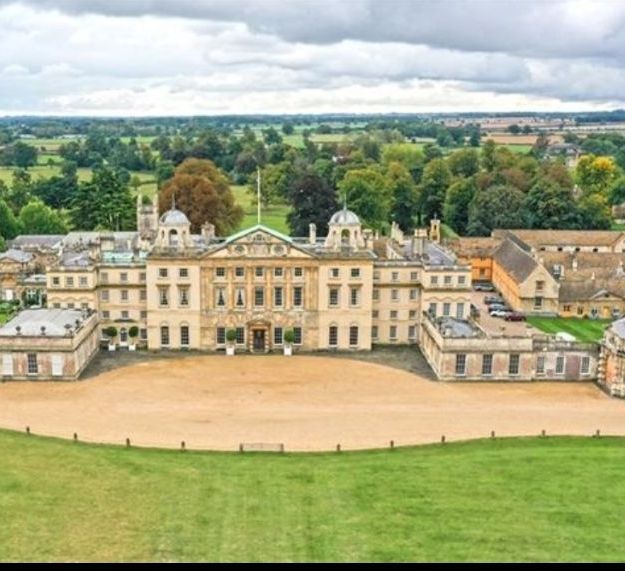
The name alone illustrates how deeply the new energy economy is intersecting with Britain’s old landed one. The Badminton Estate, centred on Badminton House and associated for centuries with the Dukes of Beaufort, owns land within part of the proposed Lime Down Solar Park. The project’s own environmental documentation confirms that land within Lime Down C is partially owned by the Estate.
Lime Down’s economic assessment explicitly identifies continued income for eligible landowners through ground rent, replacing income lost from agricultural use of the solar sites.
That fact alone is important.
The financial mechanism is not hidden. The agricultural use changes. The landowner receives ground rent instead.
Lime Down is still under examination, and the evidence does not currently justify saying that a particular Badminton tenant has been removed because of the project. We should not make that leap. The examination is continuing and the project itself expects a final decision in late 2026 or early 2027.
But even without that claim, Badminton illustrates the wider transformation perfectly. Land belonging to one of Britain’s most famous landed estates is participating in a giant energy development whose own economic case recognises ground rent to landowners as one of its benefits.
The estate does not need to manufacture a solar panel.
It does not need to invent an inverter.
It does not need to build the grid.
Its scarce contribution is more fundamental.
It owns the ground.
That is what the renewable-energy industry needs.
And ownership possesses a curious quality in these transactions. The developer may control the land for 40, 50 or 60 years, but the freeholder generally remains the freeholder. The company acquires contractual control rather than necessarily buying the underlying inheritance outright.
In practical terms, the estate can exchange one use for another while preserving ownership.
Agriculture becomes solar.
Agricultural rent becomes energy rent.
A farmer may move, retire, accept compensation or receive replacement land.
The freehold survives the lot.
The obvious response is that landowners have always changed the uses of their property. They have. Estates have developed houses, quarries, commercial property, forestry and industry for generations. Solar is not unique in that respect.
What is unusual is the scale and speed at which national policy is now creating demand for one particular alternative use across enormous areas of countryside.
The Government’s Clean Power strategy requires a rapid expansion of solar generation. The planning system is processing a growing number of projects measured not in tens of acres but in thousands. Lincolnshire alone is facing an extraordinary concentration of nationally significant energy proposals.
When national policy creates that demand, ownership concentration acquires greater commercial significance.
The estate that can offer 2,000 acres close to a grid connection possesses something vastly more useful to an infrastructure developer than 100 separate owners each offering 20 acres.
The economics begin to select for scale.
And that raises a question far larger than solar itself.
For centuries, Britain’s landed estates were criticised or defended according to their relationship with agriculture. The traditional bargain, at its best, involved an owner providing land and capital while the tenant provided skill, labour and agricultural enterprise. The tenant paid rent; the estate maintained the underlying asset.
Net Zero introduces a competitor into that relationship.
The energy developer can offer the freeholder a different use for the same land, often for decades, and potentially at rental levels conventional agriculture struggles to match.
Once that happens, the tenant farmer is no longer competing only with another farmer.
He is competing with infrastructure capital.
That is not a fair contest in purely financial terms.
A cereal crop must survive weather, input costs, international commodity prices and tight agricultural margins. A large solar lease is designed to provide a predictable contracted payment over many years.
The remarkable thing would be if some landowners did not find the proposition attractive.
This is why the argument must never become a simplistic attack on aristocrats or estates. The incentives are created by the system. A rational asset owner responds to the relative returns available.
The real political question is why government policy can transform the relative value of the uses so dramatically without first asking what happens to the agricultural businesses sitting underneath the freehold.
That concern is no longer confined to campaigners. Parliamentary debate has explicitly raised the position of tenant farmers who have worked land for generations but feel threatened when landowners engage with solar developers.
The problem also reaches beyond famous aristocratic names. Steeple shows how concentrated corporate freehold ownership can function in almost exactly the same way as a historic estate. The Droves in Norfolk, which we will examine separately, involves two estates under the ultimate control of a single landowner while much of the land is farmed by agricultural businesses.
The important category is therefore not “aristocrat”.
It is asset owner.
A duke can be an asset owner.
An investment company can be an asset owner.
A trust can be an asset owner.
A public institution can be an asset owner.
An ordinary farmer can be an asset owner.
What matters is who holds the title when government policy makes a different use of that title dramatically more valuable.
That is why owner-farmers must remain in the story as a control group. Where the farmer owns the land, the farmer can capture the diversification value personally. The farm business and the asset owner are aligned.
Where the land is tenanted, the equation can be entirely different.
The farmer owns the business.
The landlord owns the opportunity.
That may be the single most important distinction in Britain’s solar debate.
And it explains why the great estates matter.
They do not merely possess attractive landscapes. They possess assembled land.
They can negotiate at a scale few individual farmers can match.
They can grant options over hundreds or thousands of acres.
They can retain the freehold.
They can receive a new rental stream.
And when the energy lease eventually ends, the underlying estate can still be there.
For the tenant, 40 years is not temporary.
It is a career.
It is a generation.
It can be the difference between handing a viable farm to a son or daughter and there being no farm left to hand over.
Britain therefore needs to stop measuring solar development solely in hectares and megawatts. Every major proposal should identify how many separate farm businesses occupy the land, how many are tenants, how much of each holding is being removed, what happens to those tenancies, what replacement land is available and what agricultural employment disappears.
It should also tell us what conventional agricultural rent is being replaced by.
Most private solar rents remain commercially confidential.
That is convenient for everyone except the public trying to understand the economics of the land-use transformation being conducted in its name.
Blenheim gave us the rare exception in the first article in this series: documentation allowed a comparison between roughly £88,000 associated with farming rents and approximately £440,000 under the assumed solar arrangements.
Claydon openly says solar provides a sustainable revenue stream supporting the Estate’s financial viability.
Lime Down openly counts ground rent to landowners as an economic benefit.
Springwell openly says the willingness of one of Lincolnshire’s largest landowners was key to progressing the site.
Steeple openly records an option for lease over land where agricultural tenancies are being surrendered.
None of this requires speculation.
The documents describe the mechanism themselves.
Government policy creates the demand.
The developer needs the land.
The estate owns the land.
The tenant farms the land.
And when energy use becomes more valuable than agricultural occupation, ownership decides who is sitting in the strongest chair when the negotiations begin.
That is Robin Hood in Reverse at its most basic.
Not because every landowner is rich, every tenant is poor or every solar development is unjust.
But because a policy that dramatically increases the value of controlling a scarce asset inevitably favours the person who already owns that asset over the person who merely depends upon it.
The farmer may have worked the field all his life.
The estate owns tomorrow.
Shane Oxer. Campaigner for fairer and affordable energy
 SAY NO TO THE DESTRUCTION OF OUR LAND
Leave a comment