Britain’s council workers have spent decades building pension savings for retirement. Those savings are increasingly becoming capital for the Net Zero economy , buying solar farms, renewable-energy platforms and infrastructure assets. Follow the money closely enough and an extraordinary circle appears.
By Shane Oxer
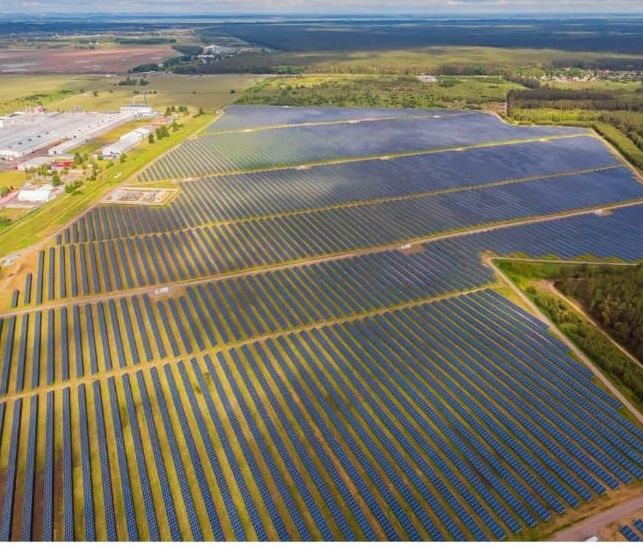
In February 2024, 53 British solar farms changed hands for around £700 million. Together they had more than 500MW of generating capacity and stretched across England, Wales and Northern Ireland. It was described as the largest portfolio of operating solar farms ever traded in Britain.
There was, however, something rather more interesting about the people on either side of the transaction.
The solar farms had belonged to Toucan Energy, which had collapsed into administration after becoming entangled in one of the most disastrous episodes of local-authority finance in modern Britain.
Thurrock Council had invested £655 million in Toucan. The council’s latest public divestment report says approximately £525 million has so far been recovered, with further recoveries still expected. The Government’s independent Best Value Inspection was damning about the wider investment strategy that led Thurrock into financial crisis, describing a model based on borrowing short-term money from other local authorities and investing it for longer periods in pursuit of higher returns. The roots of that strategy included a £24 million investment in a Toucan-related solar farm as far back as 2016.
When Toucan entered administration, Thurrock was its primary creditor. The 53 solar farms were eventually sold for approximately £700 million to funds managed by Schroders Greencoat. Thurrock initially received just over £510 million from the proceeds to reduce its debt.
Now look at who helped buy them.
At the time of the acquisition, Brunel Pension Partnership announced that six of its Local Government Pension Scheme clients were major investors in the transaction through the Schroders Greencoat Wessex Gardens fund: the pension funds of Avon, Cornwall, Devon, Gloucestershire, Oxfordshire and Wiltshire. Other Brunel pension clients had indirect exposure through another Greencoat renewable-income vehicle. The portfolio comprised 53 operating solar farms with a combined capacity of approximately 513.5MWp.
It is worth considering what had happened.
One local authority had lent hundreds of millions into a solar investment structure which ultimately failed.
The assets went into administration.
They were sold.
And among the institutional investors helping to acquire the solar portfolio on the other side were funds investing the retirement savings of local-government workers.
This was not Thurrock Pension Fund selling solar farms to another pension fund. Thurrock Council’s disastrous investment programme was a treasury and borrowing operation, and that distinction is essential.
But the circularity is extraordinary nonetheless.
Public-sector money had financed the assets on the way in. Public-sector pension capital helped finance their ownership on the way out.
The solar farms remained.
The financial structure around them changed.
And the entire episode tells us something important about the way Britain’s Net Zero economy is evolving.
The renewable-energy business is no longer simply about developers finding fields and erecting panels. Once operating, those fields become infrastructure assets capable of being bought, sold and packaged into investment funds designed to provide long-term returns to institutions such as pension schemes.
To a farmer, a field is soil.
To a solar developer, it is a potential generating site.
To an infrastructure fund, once consented and operational, it can become a stream of future cashflows.
That transformation is exactly what this series has been following.
The great estate provides the land. The developer secures the option and planning rights. The grid connection turns the project into something capable of exporting power. Capital builds it. Once operational, the asset can be sold to investors who may have had nothing whatsoever to do with the original planning application.
At the end of that chain can sit the pension savings of an ordinary council worker.
There is nothing improper about that. Pension funds exist to earn returns so they can pay pensions. Their trustees have legal and fiduciary responsibilities to members. If an operating solar farm offers the risk, income and inflation characteristics they want, investing in one may be entirely rational.
What is remarkable is how rarely the public is shown the whole financial chain.
Consider Westminster.
In December 2020, the City of Westminster Pension Fund committed €55 million to Macquarie’s Renewable Energy Fund 2, known as MGREF2. Westminster’s own pension committee papers provide a wonderfully clear record of what happened next.
By June 2022, MGREF2 had acquired a 50 per cent interest in Island Green Power, one of Britain’s major utility-scale solar developers. Westminster’s investment report listed Island Green Power directly among the fund’s underlying projects, with a reported gross value at that point of £152.6 million.
Island Green Power is not a company which merely buys a few finished solar panels. Its business begins much earlier in the process: identifying land, assessing sites, securing grid connections and planning permissions, and bringing large solar projects towards construction.
In other words, institutional pension capital had entered not simply the ownership of finished renewable assets, but the corporate platform involved in creating them.
Macquarie initially bought 50 per cent of Island Green Power through MGREF2 in 2022. In May 2025, other Macquarie-managed funds acquired the remaining interest, taking Macquarie Asset Management’s managed-fund ownership of the UK business to 100 per cent. Macquarie said Island Green Power had by then developed more than 3GW of solar projects to ready-to-build stage and had more than 15GW of utility-scale solar and battery projects in its UK pipeline.
Westminster’s investment did not buy a named corner of a particular Lincolnshire field. It owns an interest in a pooled fund, and the fund owns interests in a range of projects and businesses. It would therefore be false to point at an Island Green Power planning application and claim that a Westminster refuse collector personally financed that solar farm.
But the investment connection itself is not speculation.
It appears in Westminster Council’s own pension papers.
By June 2025, around 97 per cent of Westminster’s €55 million commitment to MGREF2 had been drawn for investment. The fund was reporting a life-to-date net internal rate of return of 6.1 per cent a year. That is MGREF2’s overall fund return, not the return from Island Green Power specifically, but it explains why pension investors participate in these markets in the first place. They expect their capital to earn money.
Once again, investment is not charity.
The pension fund expects a return.
Macquarie expects a return for its investors.
The renewable developer needs profitable projects.
The landowner expects rent.
The network owner earns regulated revenues.
And the electricity consumer remains at the other end of the system paying for energy.
There is an obvious temptation to portray that arrangement as evidence that ordinary workers are somehow being robbed by their own pension funds. That would be silly. Those workers are also the intended beneficiaries of the pension returns. If the investment performs well, their pension scheme becomes better funded.
The real story is more subtle and far more important.
Working people’s deferred wages have become part of the vast pool of institutional capital being mobilised to build and acquire Britain’s Net Zero infrastructure.
And Government actively wants more of it.
The Local Government Pension Scheme in England and Wales is enormous. The Government’s 2025 Pensions Investment Review put its assets at around £400 billion, supporting approximately 6.7 million members, and expects the scheme could reach around £550 billion by 2030. Its reforms are explicitly intended to create larger pools of professionally managed capital and encourage more investment in productive assets. The Government specifically identifies clean energy, infrastructure and housing among the areas where LGPS capital can provide anchor investment.
The numbers become staggering very quickly. Government modelling says that if 5 per cent of projected LGPS assets were invested locally by 2030, that would represent £27.5 billion. Combined with wider pension reforms, ministers have talked about mobilising more than £50 billion into infrastructure, housing and growing businesses.
So this is not an accidental side effect of the green transition.
Pension capital is increasingly part of the plan.
Brunel provides an excellent example of the scale already achieved. Before its client assets began moving into successor pools under the latest Government reforms, it brought together ten Local Government Pension Scheme funds covering Avon, Buckinghamshire, Cornwall, Devon, Dorset, the Environment Agency, Gloucestershire, Oxfordshire, Somerset and Wiltshire. Those funds collectively represented hundreds of thousands of members.
In 2020, Brunel and the Superannuation Arrangements of the University of London committed £277 million to Greencoat Renewable Income, a fund expressly designed to invest in UK renewable infrastructure producing predictable sterling cashflows with inflation protection. The underlying investments were intended to include solar, wind, bioenergy and renewable heat. The fund itself also committed capital into Greencoat Solar II, which by then had more than £1 billion of investor commitments.
Four years later, six Brunel pension clients were participating in the £700 million acquisition of the Toucan portfolio.
The direction of travel could scarcely be clearer.
Britain’s pension system is becoming an owner of the energy transition.
That raises a difficult question for the Robin Hood in Reverse argument running through this series, because pension capital does not fit neatly into a story of poor versus rich. The beneficiaries of an LGPS fund include dinner ladies, teaching assistants, social workers, refuse collectors, care workers, administrators and thousands of other public-sector employees.
They are hardly landed aristocrats.
Yet their savings are being aggregated into enormous pools of capital capable of buying infrastructure portfolios worth hundreds of millions of pounds.
That does not invalidate the argument.
It tells us that the system is more complicated than the slogan.
The council worker can be both consumer and capitalist.
Their household pays an electricity bill. Their deferred wages sit inside a pension fund. The pension fund invests in infrastructure. The infrastructure fund owns a renewable asset. The renewable asset generates cash. Part of the return eventually supports the worker’s pension.
One person can therefore sit at several different points in the same economic chain without ever knowing it.
But notice who controls the decisions.
The individual pension member does not choose the field.
They do not negotiate with the farmer.
They do not negotiate the solar lease.
They do not decide where a battery installation is built.
They do not determine whether a tenant’s land remains agricultural.
Professional asset managers, pension pools, infrastructure funds, developers and landowners make those decisions.
The worker supplies capital indirectly.
Others exercise control.
And the amounts of capital involved mean that control can become formidable.
This helps explain another feature of Britain’s renewable land rush. A developer does not necessarily need to hold a project for 40 years. It can identify the site, secure land options, obtain a grid connection, win planning permission and move the project towards construction. At that point the project has been transformed from an idea into an investable asset.
It can then be sold, refinanced or brought into partnership with institutional investors.
The project may change hands.
The lease remains.
The panels remain.
The landowner remains.
And the farmer who originally occupied the land may by then have vanished entirely from the financial story.
Toucan demonstrates the other end of that lifecycle. Its 53 solar farms were no longer speculative planning projects when they were sold. They were operating assets generating electricity and revenue. That is why a portfolio of fields covered in solar panels could command a transaction value of around £700 million.
More than half a gigawatt of British countryside had become a tradeable infrastructure portfolio.
The name above the door could change while the assets stayed exactly where they were.
That is the financialisation of land in its purest form.
And once the infrastructure becomes a financial asset, the original question — who owned the field before the solar company arrived? — can seem almost quaint.
The investor sees capacity, revenue, contracts, operating costs and expected returns.
The pension committee sees asset allocation, performance and risk.
The fund manager sees a portfolio.
The farmer saw a field.
Britain needs to understand all four views.
Because public policy is increasingly connecting them.
Government wants dramatically more solar. It wants larger pools of pension capital. It wants more investment in clean energy and infrastructure. It wants pension schemes to help finance domestic economic growth. It wants asset managers capable of deploying billions rather than millions.
Those objectives can reinforce one another.
A Government-created demand for renewable infrastructure creates investment opportunities.
Large estates and other freeholders provide land.
Developers convert land rights into projects.
Infrastructure funds buy the resulting assets.
Pension capital supplies part of the money.
Returns flow back through the investment structure.
There may be substantial benefits. Pensions need income. Britain needs investment. Infrastructure has to be financed somehow. Local-authority pension funds investing successfully in productive UK assets can be preferable to sending all their capital overseas.
But none of those arguments relieves us of the obligation to ask what is happening underneath the financial structures.
Who lost the agricultural land?
Who received the lease payment?
Who owns the project?
What government-backed revenue arrangements support it?
What does the fund manager charge?
What return does the pension fund receive?
And what does the electricity consumer ultimately pay?
Those questions become even more important when the same public sector appears repeatedly at different points in the chain.
Thurrock Council borrowed vast sums and placed £655 million into Toucan. Toucan collapsed. Its solar assets were sold. Thurrock’s latest public figures record around £525 million recovered so far from that exposure, with further recovery still pursued. Six other local-government pension funds were among the major investors participating through Schroders Greencoat vehicles in the acquisition of the 53 operating solar farms.
That does not prove a conspiracy.
It proves something much more useful.
The British state, local government, institutional finance and the renewable-energy economy are becoming deeply intertwined.
Council money can finance projects.
Council pension money can own projects.
Government policy can create more projects.
Consumers buy the electricity.
Taxpayers ultimately stand behind local authorities and public-sector pension obligations.
And financial institutions sit between those relationships, arranging, managing, buying and selling the assets.
This is why the phrase “follow the money” matters.
Not because money travels in one simple straight line from a poor household to a wealthy landowner.
It does not.
It moves through a web.
Bills. Taxes. Pension contributions. Borrowing. Infrastructure funds. Ground rents. Project revenues. Network charges. Government contracts. Investment returns.
Different people benefit at different points.
Different people carry different risks.
But ownership remains decisive.
The tenant farmer may spend a lifetime building a business and still not own the asset beneath it.
The council worker may spend a lifetime building a pension and still have no idea which solar farms or renewable companies their savings ultimately finance.
The consumer may spend a lifetime paying electricity bills and own none of the infrastructure producing them.
That is why this investigation began with the farmer standing in a field.
The farther upwards we travel, the more complicated the machinery becomes.
Estate.
Lease.
Developer.
Project company.
Infrastructure fund.
Asset manager.
Pension fund.
Government policy.
Consumer.
Then, eventually, back to the worker whose wages and bills feed different parts of the same system.
Robin Hood in reverse was never going to be as simple as a duke with a sack of money.
Modern Britain does things through funds.
Shane Oxer. Campaigner for fairer and affordable energy
 SAY NO TO THE DESTRUCTION OF OUR LAND
Leave a comment