
Hope Moor: The Day People Stood on the Land and Said No
This revised layout follows the day more closely: the gathering at the start, the walk across the moor, the trig point between Hope Moor and Barningham Moor, and the final stand with Lord Botham, Suzy Wilson and Alan Hinkes.

Yesterday, people did not just talk about Hope Moor. They walked it. They stood on it. They looked across it. They saw, with their own eyes, what could be lost.
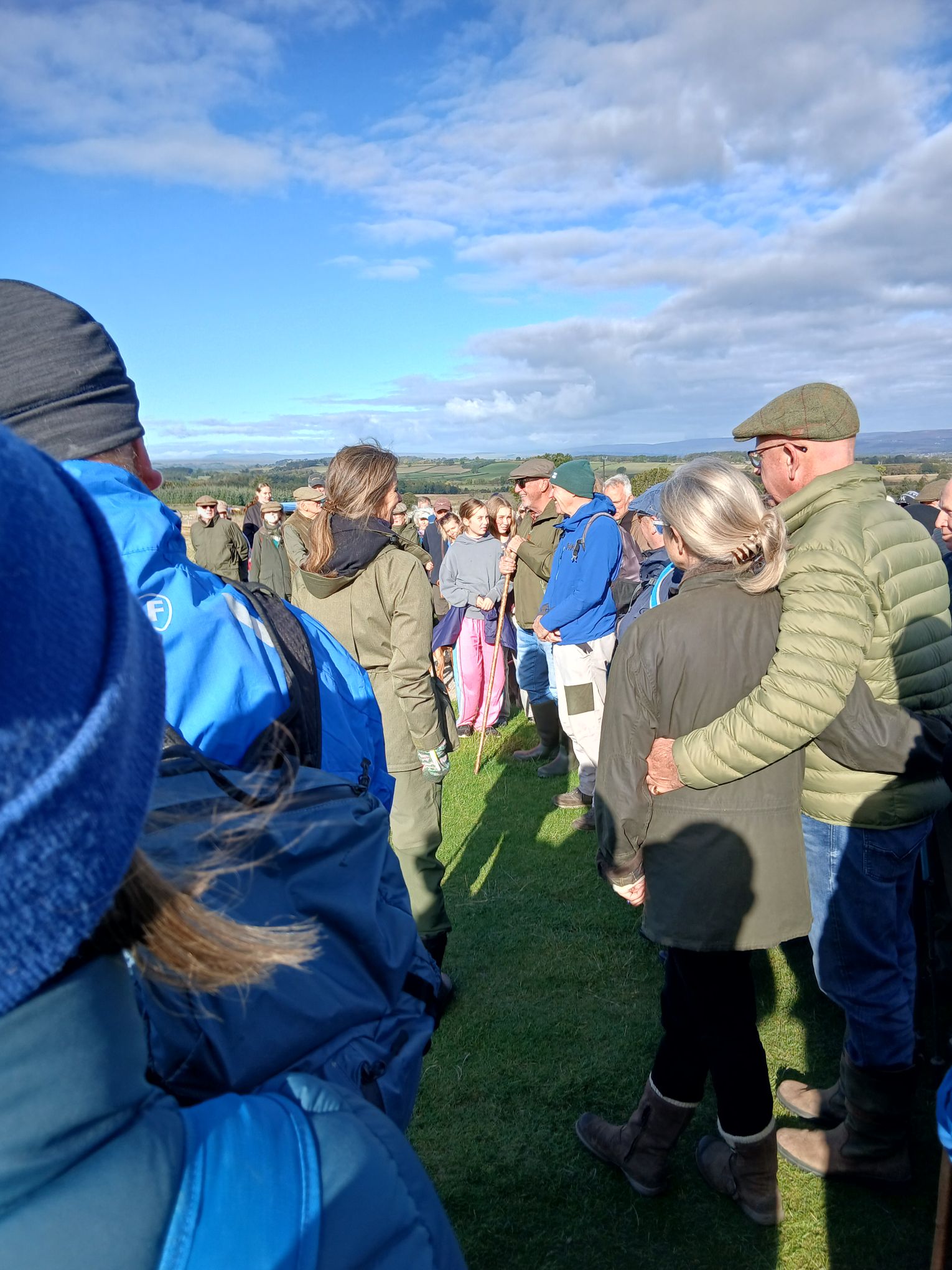
This was not a meeting in a hall, not a line on a planning map, and not another developer’s document full of technical language. It was real people standing on real moorland, in the wind and sunlight, looking across one of the great open landscapes of the North.
Hope Moor is not empty land. It is not a blank space waiting to be industrialised. It is peat, grass, heather, stone walls, old tracks, open skies, long views, sheep pasture, wildlife, memory and belonging. It is part of the living landscape around Barningham Moor, Hope Moor and the wider northern uplands.
The gathering before the walk
The day began with people gathering before heading out across the moor. Walkers, residents, campaigners, families and countryside supporters came together not as a staged political event, but as people who wanted to see the land for themselves.


The proposal for Hope Moor Wind Farm threatens to change this landscape forever. This is not about a small, hidden structure tucked away out of sight. It is about industrial-scale turbines, access tracks, concrete foundations, crane pads, cabling, grid works and construction traffic being brought onto moorland that has carried its character for generations.
That is why so many people came. Some places cannot be measured only in megawatts. Some places have value because they are still open, still wild, still recognisable, and still part of who we are.
The walk across Hope Moor
The walk showed the scale of the land. Long views, open sky, stone boundaries, rough grass and moorland tracks made clear that this is not an abstract planning site. It is a real landscape beneath people’s feet.


The fight for Hope Moor sits in a much older story. Mary Mann’s fight for Barningham showed that these landscapes have been defended before. Her campaign was rooted in love of place, heritage and common sense. It said that some moorland landscapes are too valuable to sacrifice.
That fight did not end with her. It lives on now in Hope Moor. It lives on in every person who walked the land yesterday. It lives on in every community being told that national energy targets must override local landscape, local memory and local consent.
One of the most telling images from the day shows a broken dry-stone wall stretching out across the moor. Campaigners believe this area could be close to the possible location of one of the proposed monstrous wind turbines. This is not empty land on a developer’s plan. It is living countryside, shaped by history, walked by ordinary people, and worth defending.

Once heavy infrastructure arrives, the damage is not just visual. Moorland can be cut, compacted, drained and fragmented. Tracks are widened. Foundations are poured. Substations and cables follow. The industrial footprint spreads beyond the turbine bases themselves.
Peatland should not be treated as waste ground. It holds water. It stores carbon. It supports wildlife. It helps shape the hydrology of the landscape. To damage peatland in the name of environmental policy is not green thinking. It is contradiction.
At the trig point
The gathering at the trig point brought the day together. People stood on the land itself and looked back across the very landscape that could be changed by turbines, access roads and industrial infrastructure.


Hope Moor is not alone. Calderdale Energy Park and Walshaw Moor face similar fears. Across the North, upland landscapes are being looked at as infrastructure zones rather than living countryside. That is why this fight is growing.
The intervention of Lord Botham , Sir Ian Botham , has now helped give the campaign a national voice. His support matters because it shows that this is not just a local objection. It is part of a wider argument about the future of England’s moors, the Pennines and the landscapes that define the North.

This is not about being anti-energy. Britain needs secure, affordable and reliable power. But energy policy must have judgement. It must respect place. It must respect democracy. It must respect peat, wildlife, farming, heritage and the people who live with the consequences long after developers have moved on.
The people who gathered were not obstacles to progress. They were guardians. Guardians of the moor. Guardians of memory. Guardians of a landscape that cannot speak for itself.


This is a call to walkers, ramblers, farmers, birdwatchers, conservationists, parish councils, photographers, historians, veterans, young people, village communities and everyone who has ever stood in open country and felt what cannot be replaced.
Speak out. Write to your MP. Attend consultations. Support the Hope Moor Wind Farm Action Group. Walk the land. Photograph it. Record the wildlife. Share the evidence. Ask where the turbines will stand. Ask what roads will be built. Ask how much peat will be disturbed. Ask where the cabling and substations will go. Ask who profits. Ask who decides. Ask what will be left for the next generation.
Yesterday proved something important. Hope Moor is not forgotten. It is not undefended. It is not just a planning reference or a developer’s opportunity. It is a place loved by people who are prepared to stand up for it.
Mary Mann carried the old fight. Lord Botham has helped give the new fight a national voice. The people who gathered on the moor showed that the spirit of resistance is alive on the land itself.
For Barningham. For Hope Moor. For the views across the Pennines and beyond For the North. For England’s living landscape.
Stand up. Speak out. Defend the moors.
Because the land remembers — and so must we.
Shane Oxer — Campaigner for fairer and affordable energy
Leave a Reply